
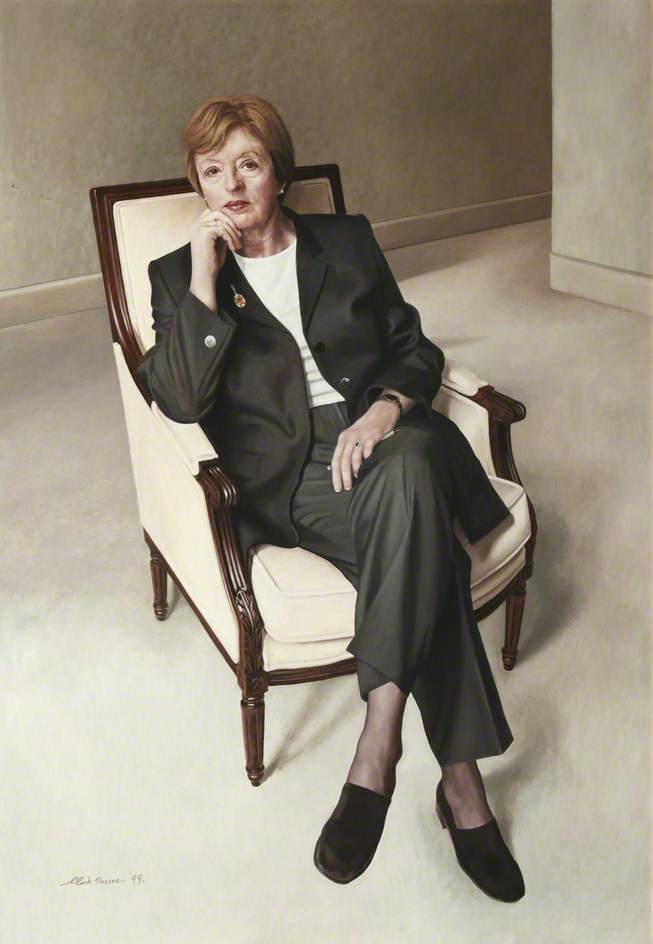
In Memoriam: Professor Dame Averil Cameron (1940–2026)
It is with great sorrow that the Society for the Promotion of Byzantine Studies shares the news that Professor Dame Averil Cameron, our former President and dear friend, has passed away. She will be deeply missed by all who knew her and her work.
The Society invites members and colleagues to share their memories of Dame Cameron. If you wish to contribute a short tribute or share a photograph, please email the Webmaster at webmaster@byzantium.ac.uk. These will be published on this dedicated memorial page.
You may read the obituary published by Victoria Leonard, a research fellow at the Institute of Classical Studies, University of London, in The Guardian, here.
In the Autumn of 1987, I found myself in Paris with my husband, Alan Forrest; him to work in the Archives Nationales, me to work on my first book in the Bibliothèque Byzantine of the Collège de France at 52, rue du Cardinal Lemoine and both of us to brave the eccentricities of the old Bibliothèque Nationale in the rue Richelieu. We lived in a fourth-floor apartment in Bécon-les-Bruyères in the northern suburbs, lent to us by an Anglo-French friend. The decor had been untouched since the 1940’s, the immense hot-water boiler took hours to warm up and an anarchic fridge delighted in rumbling into action in the middle of the night and viciously throwing anything stored on top of it onto the floor. Cooking facilities consisted of a Baby Belling: two hotplates and a tiny oven. This was, however, the very autumn that Averil gave her celebrated series of Lectures at the Collège de France. The subject was Eusebius’s Vita Constantini. To say that these Lectures were a ‘smash hit’ would be an understatement. Le tout Byzance was there; the front row consisted, among other luminaries, of Gilbert Dagron, Michel Kaplan and yes, Paul Lemerle himself! Averil, naturally, delivered her Lectures and fielded questions in perfect French. I can’t quite remember how it started—almost certainly with a kind invitation from Averil herself—but it soon became our custom, after each Lecture, to repair together to a Left Bank bar, drink kir, and gossip. At the end of the Lecture series there was a vin d’honneur at which Averil was presented with a gold medal of positively Justinianic proportions. She was, she quietly confessed, a little disappointed that the inscription just read ‘A. Cameron’ (which might have led to some confusion as to the dedicatee). One November evening, Averil, with her friend Han Drijvers, bravely trekked out to the suburbs to have dinner with us. She arrived wearing the most fabulous fur jacket and looking like a film star. We ate quail (nothing else would fit in the Baby Belling) and I have very happy memories of the occasion. Since then, although our paths did not cross very often, it was always a great joy to run into Averil. I will always treasure her quiet words of encouragement, her incisive interventions in otherwise rather soporific meetings, her constant willingness to support one’s academic endeavours (her appearance at my East Mediterranean Seminar in Manchester lured in some otherwise rather stand-offish Classical colleagues) and, above all, her example as a scholar. As any academic ‘working Mum’ will know only too well, calibrating the ‘work/life’ balance is a tough challenge. Averil, an inspiration to so many of us, showed us what could be done and to what heights we should aspire.
Rosemary Morris
27th May, 2026
A Tribute to Averil Cameron
Writing about Averil Cameron, who died on 7 April, challenges those who worked with her to single out specific aspects of her manifold achievements and distinguish the most lasting triumphs of her astonishingly rich life. Many obituaries have listed the honours bestowed upon her from around the world: in China, Japan, America, Australia, the Near East, Scandinavia and Europe her death is being noted with sadness and deep recognition. Here I would like to emphasize the many ways in which she fought and succeeded in elevating the field of Byzantine Studies onto a serious plane, alongside and equal to Late Antiquity, Classics and Medieval History (something I benefitted from personally).
She led this campaign from King’s College London, where in 1989 she insisted that the new position to which she was promoted should be named Late Antique and Byzantine Studies. I recall how colleagues in Paris found the combination incomprehensible, because they clung to the separation between anything classical (properly Greco-Roman) and medieval (a completely different domain). Previously, she had held the established chair in Ancient History since 1978, had been elected to the British Academy in 1981, and had published her study of Procopius in 1985 – all activities that fell squarely within Classics and the relatively novel field of Late Antiquity. With her mastery of Roman imperial traditions, she had the authority to facilitate the integration of Byzantine civilisation into the early medieval world, helping to end its academic isolation while expanding the entire framework of Late Antiquity.
The Society for the Promotion of Byzantine Studies was of course part of this campaign, and she participated with great energy in its foundation in 1983, with Sir Steven Runciman as President and Professor Anthony Bryer as Secretary. She told me with deep regret how she had tried to persuade the British Academy to establish a separate field of Byzantine Studies and to bring Anthony Bryer into its fold – to no avail. In other areas, however, her grasp and handling of administrative structures and her skilful use of the power she manifested made her a force for improvement on many committees and official commissions.
Her personal move from the world of Roman Studies (she edited its Journal and was president of its Society) to the greatly enlarged Late Antique and Byzantium sphere was also marked by her foundation of the Centre for Hellenic Studies at King’s, with the formidable contribution of Nicholas and Matti Egon. Nicholas supported the establishment of the Runciman Lecture, which remains an annual event. And her commitment to this wider field became clear in her publications, The Byzantines (2006) and Byzantine Matters (2014), which appeared while she was running Keble College, Oxford.
Part of the driver of this determined expansion derived from her close reading of early Christian texts, which had inspired Greek Orthodox theology throughout the Byzantine period and beyond. Her study of Christianity and the Rhetoric of Empire (1991), based on the Sather lectures at Berkeley, revealed her acute understanding of how early Christian theologians and particularly the Cappadocian Church Fathers employed ancient Greek formulations and created inspired expressions of their complex theology and faith. It also revealed a second driver, the absorption of theoretical issues into Classics: the linguistic and cultural turns, feminism and the influence of Foucault. Averil was fearless in the way she embraced and mastered them all.
We met and first worked together in the late 1970s at the collective reading of the Parastaseis syntomoi chronikai, which Alan Cameron had noticed during his research on Circus Factions. Not only was the date and transmission of these ‘short historical notes’ problematic, but they also contained references to mythic stories about Constantinople, its statues, and individuals like the Emperor Philippikos. At King’s, Averil gathered a group of people interested in the text to read, translate and explain it, and allowed me to assist in its final editing for publication (1984). It was an exhilarating experience that I deeply appreciated.
Having managed to raise her two children while continuing to work extremely productively, I think she was always attentive to female colleagues who were coping with the family/research conundrum. But her commitment to feminism also brought a more general support for women, and an awareness of their positive contributions to Classics, a field so long dominated by men. This was not so essential to Byzantine Studies where women were often more prominent, but Averil’s stern judgements as well as encouragement made a considerable improvement. She could be very severe, with good reason, and her approval was therefore more anxiously sought.
When I was appointed to her chair after she left King’s to take on the leadership of Keble College, Oxford, I felt the aura of her creation and how it had brought together a very wide range of support for Late Antique and Byzantine Studies. From the Chapel and the Principal to Theology and Religious Studies, Philosophy and History, forms of collaboration flourished, such as sharing the supervision of PhD students. And Averil’s closest colleagues in Classics and the Department of Modern Greek couldn’t have been more helpful as I tried to expand her work. She had made King’s one of the liveliest centres of explorations of Byzantium.
Thanks to her memoir, Transitions (2025), we now know more about Averil’s background and childhood. Among other things it engendered a loyalty to the Labour Party that was sorely tested in more recent times. She remained committed to the principles of fairness, equity and merit and was a critical friend of traditional institutions from the church to the Royal Family. Her brilliance as a pianist and love of music runs through all her varied academic experiences while her appreciation of what the chef at Keble could provide during the COVID lockdown revealed another of her particular pleasures. What an adventurous life, so elegantly led! How seriously she is missed by so many of us.
Judith Herrin
13 May 2026
Ανακοίνωση του Διοικητικού Συμβουλίου του Κέντρου Βυζαντινών Ερευνών του Αριστοτελείου Πανεπιστημίου Θεσσαλονίκης
Announcement of the Administrative Council of the Centre for Byzantine Research of the Aristotle University of Thessaloniki
Dame Averil Cameron (1940 – 2026)
A few days ago, the world of Byzantine studies and culture bid a deeply sorrowful farewell to the distinguished British Byzantinist and academician Dame Averil Cameron.
Dame Averil Cameron was born in 1940 and studied at Oxford. She was professor of Ancient History and Late Antique and Byzantine Studies at King’s College London and a professor of Late Antique and Byzantine History at Oxford. She served as Warden of Keble College, Oxford, and President of the Oxford Centre for Byzantine Research, and was the first Director of the Centre for Hellenic Studies at King’s College London.
Her extensive research and writing work focused on the history and culture of Late Antiquity and Byzantium, and her teaching had a decisive influence on hundreds of scholars. Dame Averil Cameron’s presence was a fixture at all major academic gatherings and conferences of Byzantinists worldwide.
She was awarded honorary doctorates from the Universities of Warwick, St. Andrews, Aberdeen, and Queen’s University Belfast. She was a member of the British Academy. She received the honorary distinction of Dame Commander of the Most Excellent Order of the British Empire (DBE).
The Center for Byzantine Research of the Aristotle University of Thessaloniki has the honor to include Dame Averil Cameron among its Corresponding Members since March 12, 2014, in recognition of her teaching work and her invaluable international research and scholarly contributions to the study of Late Antiquity and Byzantium. On the occasion of her proclamation, Dame Averil Cameron delivered a keynote address to the packed Center titled “Byzantium Today.”
Dame Averil Cameron’s unique and unwavering connection to the Byzantine archaeology of Thessaloniki was also expressed in practice through the letter she boldly signed in 2021 to the Greek state in favor of the in-situ rescue and preservation of the “uniquely important antiquities” uncovered at Venizelos Station “as they constitute a rare Byzantine urban landscape,” uniting her voice with all the eminent Byzantinologists of the world.
The Administrative Council of the Center for Byzantine Research of the Aristotle University of Thessaloniki respectfully submits this text as a minimum tribute to the memory of the distinguished Byzantinist.
The President,
Melina Paisidou
The members,
Christos Arampatzis, Vice President
Ilias Taxidis
Alexandros Liarmakopoulos
Sophocles Kotsopoulos
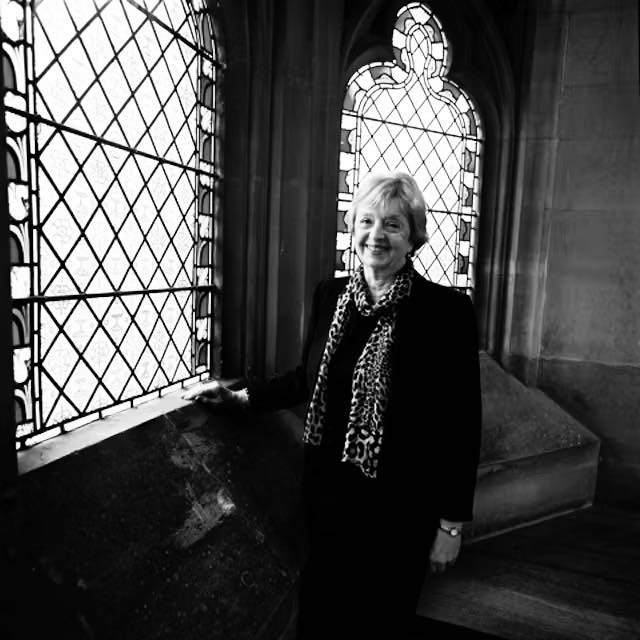
When I worked for the Prosopography of the Byzantine Empire (PBE) while Averil was chair of the committee in succession to Robert Browning, I gave a presentation on PBE, what we did and how we hoped it would contribute to knowledge. My main point was that in amassing all the information about each individual, more often than not, what came out was the shades of grey: nothing was black/white contrasts. The paper had a very uninspired working title that I no longer recall. Averil and the rest of the audience knew I wasn’t happy with the title. At one point she lent across the table and (totally unexpectedly to me at least) said “What about A Whiter Shade of Pale? for your title” [the Procol Harum song]. I published the paper under that title.
Dion Smythe
In Memory of Averil
I heard of Averil’s passing from the Sociedad Española de Bizantinística while travelling from Salerno to Rome.
I believe I first met Averil in 1993 at the SPBS meeting held in Exeter College, Oxford. Geoffrey Greatrex had invited me to step in to play the role of ‘Belisarius’ in a performed reading of Byzantium by Francis Warner, in Exeter’s Chapel. Afterwards, Averil approached me with a characteristic mixture of generosity and precision, offering kind words about my portrayal. It was a small moment, yet one that stayed with me and marked the beginning of many years of encounters shaped by her encouragement and intellectual generosity.
Over the decades that followed, I saw her often at Oxford seminars and related international gatherings. Even when we knew each other only slightly, she extended a trust and collegiality that were deeply felt. On one occasion she lent me her only copy of her 1967 paperback translation of Procopius. That was a gesture that spoke volumes about her openness and her instinct to support others. She later appreciated its timely return, but the greater gift was the confidence she placed in me.
I had the privilege of presenting at a colloquium at Keble College that Averil convened and chaired for postgraduate students from Oxford, Birmingham, and perhaps London. As the only independent scholar present, I found myself under close scrutiny by some postgrads after my paper until Averil intervened with a calm and decisive, “He’s got a point.” The atmosphere shifted immediately. Her authority was never loud, but it was unmistakable, and it was always exercised with fairness.
During my MSt at Oxford in 2011–12, we spoke about the privilege of researching Byzantium: a sentiment she embodied in her scholarship and in her mentorship. She continued to support my work long after, including during the Procopius conference at Corpus Christi College in 2014. She generously contributed the opening chapter to the Routledge volume Procopius of Caesarea: Literary and Historical Interpretations (2018) and offered thoughtful guidance throughout the editing process.
One of my fondest memories is of her accepting my invitation to a guest night dinner at the school where I taught in Summertown, Oxford. She made a deep impression on the Headmaster and guests alike, as she did on so many who encountered her. My wife, Marina, later told me that during the evening Averil, with her characteristic modesty and gentle humour, remarked that, as she had been made a Dame, there were now “too many”, which is a comment that captured both her self-effacing nature and her quiet wit.
As Averil’s faith was an important part of her life, I lit a candle for her in the Basilica of San Paolo fuori le Mura, Rome. It felt like a fitting gesture for someone whose kindness, scholarship, and quiet strength illuminated the paths of so many.
Her influence endures in her work, in her students, and in all those she encouraged along the way. Thank you, Averil.
Christopher Lillington-Martin
Besides her pioneering scholarly achievements, Averil was an excellent teacher and a generous colleague. I first met her as a student at King’s College London. One of the modules she was teaching at the time was about the seventh century and the impact of the Arab expansion on the Christian communities of the Near East. Aware of my interest in the history of Cyprus, she suggested I write my first essay on the sources for the first Arab raids on the island, through which I duly ploughed. When a few weeks later she saw me in the corridor she asked me, in what at the time I perceived as her unmistakably stern manner, to meet in order to discuss my essay. Prepared as well as I could to be dressed down for my deficient work, on the agreed day I climbed with great trepidation the stairs to her office. What I got instead was the most constructive, helpful and encouraging words and advice for what was, after all, the first history essay I had ever written. This first encounter gave me a good sense of how a great scholar can also be a great teacher. It also revealed the kind human being behind the austere façade.
Later on, while Averil was Warden at Keble and I was pursuing doctoral research at Oxford, despite her busy schedule she would contact me when she saw an opportunity that she thought might be useful, be it an introduction to a visiting scholar or an invitation to a scholarly gathering. Without exception these proved beneficial.
When I joined as research assistant the Prosopography of the Byzantine World project, Averil was chairing its steering committee and I was supposed to act as secretary, drafting agendas, reports and minutes. Lacking any experience in such administrative duties, at the beginning it all looked rather daunting. Averil quickly turned it into a smooth and painless task through her patient guidance. The few sides to her character and personality that I had the good fortune to experience left an indelible mark, heaps of gratitude, admiration and enormous respect.
Tassos Papacostas
Just a quick note to express my sadness to upon learning of Averil’s death. I had seen her just in December as well as earlier last year – she even participated virtually in a panel discussion of her memoirs with a seminar in Cambridge, which I helped arrange (in March). I first met her in London in the early 1990s at a seminar on Procopius given by another scholar, Kate Adshead. Right from that first meeting, when I was just a doctoral student, she was kind and helpful. When I had just finished my doctorate, in 1994, she became Warden of Keble, and I remember helping her unpack her books in the lodgings. Over the following years, both when I was in England or after I had moved to Canada, she was invariably helpful and encouraging; I am indebted to her for her permission to adapt her excellent translation of Procopius’ Persian Wars to accompany my commentary. The breadth of her interests, going well beyond Byzantium and Late Antiquity, was remarkable and inspiring. Her loss is thus all the more keenly felt.
Geoffey Greatrex
I was deeply saddened by the sad news that Averil Cameron had died. Even though I have only met her three or four times during stays in Oxford and London, I was most impressed by the encounter with her at Keble College, where she had invited me when I was a visiting fellow at Exeter College in the spring term of 2004. I will never forget this meeting, but our conversation would have been different in some respects, if I had already known what I had learned from reading her masterful Transitions. A Historians Memoir…
Günter Prinzing
I share my condolences with you and all members of the SPBS.
Ljubomir Maksimović
Being completely astonished, I am really terribly sorry. My sincere condolences to all members of SPBS.
From AIEB Committees
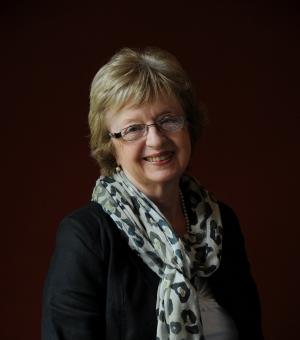
Averil Cameron’s personality was unique, her elegance rare, and her courtesy immense. Her career stands as an example to us all. The French Committee for Byzantine Studies joins in the grief of the worldwide community of Byzantinists, all of whom have, at one time or another, held one of her works in their hands and benefited from it.
Avec nos regrets et nos condoléances,
Olivier Delouis
Secrétaire du Comité français des études byzantines
It is very sad news.
May her rich contributions live forever.
Prof. Dr. Lida Miraj (Architect, Archaeologist, Restaurateur)
Professor, European University of Tirana.
President of the Albanian Association of Byzantine Studies, Tirana.
Such sad news. We extend our deepest condolences on the passing of a truly great scholar of Byzantium, whose work and dedication have left a lasting mark on the field.
May her memory be eternal.
On behalf of the Greek Committee
Taxiarchis Kolias and Theodora Antonopoulou
It was with deep sorrow that we learned of the passing of a remarkable scientist and bright individual, Professor Averil Cameron. On behalf of the National Committee of Byzantine Studies of the Russian Federation, I extend our condolences to the family, friends, and colleagues of the deceased.
Sincerely yours,
Serghei Karpov, President of the RNC
We were very saddened to hear about the passing of Professor Averil Cameron, a remarkable scholar and inspiring person.
On behalf of the Swiss Committee for Byzantine Studies, I would like to express our sincere condolences to her family, friends, and colleagues.
Manuela Studer-Karlen
A tremendous loss for all of us and for our studies, and a great sorrow for me personally.
Antonio Rigo
On behalf of the Georgian National Committee for Byzantine Studies, we express our deepest condolences on the passing of Professor Dame Averil Cameron. She was truly a great scientist and a wonderful person. This is a great loss for all of us.
May God rest her soul.
Erekle Jordania
Georgian National Committee of Byzantine Studies, President
On behalf of the Bulgarian Byzantinologists and Medievalists, I would like to express our deepest grief and condolences related to the passing of Averil Cameron. It is another irreparable loss for all of us.
Alexandar Nikolov,
President of the Bulgarian association.
On behalf of the Romanian Society for Byzantine Studies, we wish to express our deepest condolences on the passing of Professor Dame Averil Cameron.
We received this sad news with profound sorrow. Dame Averil Cameron was one of the most influential and inspiring historians of Late Antiquity and Byzantium, whose scholarship, intellectual generosity, and institutional leadership shaped our field for decades. Her work has guided and inspired generations of scholars, including many within our academic community in Romania.
We join you in mourning the loss of an exceptional scholar, colleague, and friend. Please accept our heartfelt sympathy and our solidarity with the Society for the Promotion of Byzantine Studies and with all those who had the privilege of knowing and working with her.
With sincere condolences,
Andrei Timotin
President, Romanian Society for Byzantine Studies
It is with great sadness that we have received this news. On behalf of the Argentine Committee, we extend our deepest condolences to her family and friends. May she rest in peace.
Sincerely,
Comité Argentino de Estudios Bizantinos
Upon hearing of the passing of Professor Dame Averil Cameron, I wish to express my deepest condolences on behalf of all Byzantine researchers in Japan.
It goes without saying that Professor Cameron was one of the most excellent leading scholars in both Byzantine history and Late Antiquity. She also visited Japan in 1998, and we still remember that occasion well. Professor Cameron came to Kyoto on 13 September, and was shown around the temples and gardens of Higashiyama by members of the Society for the Study of Ancient History —invited by Professor Takashi Minamikawa of Kyoto University—as well as a group of the Kansai Byzantine History Society, including Mr. Isao Kobayashi and myself. I still vividly recall how she spoke of her experience of the Japanese tea ceremony in a traditional tea room, and how she was deeply impressed by the differences between Japanese and Western gardens.
I also met her several times at the University of Oxford, where I had visited for research stays and academic conferences. In spite of her reputation for her strictness and austerity, I noticed that she was rather frank and gentle, when talking with her personally. I believe she was a person with a great capacity for understanding others. When I apologized, saying, “I’m sorry for my poor English,” she replied immediately, “No, excellent,” which made me happy and gave me a little more confidence. Perhaps she felt compelled to encourage me simply because I had come all the way from the East.
Speaking of our conversations, I am particularly struck by how Averil expressed concern that the European Foundation’s projects on Late Antiquity were too North-Western European centric, and insisted that similar initiatives must be pursued in the East as well. Indeed, she subsequently pursued the research that incorporated the birth of Islam into the context of Late Antiquity, and I felt she put into practice what she had said. I believe her research opened up the current trend of reexaminating Roman and Byzantine history within the broader context of Eurasian history.
Her research style began with the thorough analysis of the discourses of historical materials, then cut sharply and broadly into every phenomenon from the late ancient period to the mid-Byzantine era, sparking major debates relevant to the research of many members. Personally, I am particularly interested in the debates on the Decline and Fall of the Roman Empire in the late antique period and the analyses related to gender, though both are highly sophisticated, and I often struggle to keep up with them. However, in her later years, she also wrote an overview book of Byzantine religious history from the early to late periods, including the post-Byzantine era, which is easy to read for every reader and I used it as reading material for my students. It must take an enormous amount of time to list all of her achievements, so here I have recorded only what came to mind in haste.
It is hard to believe that we will no longer be able to see her striding into conference halls to deliver lectures or firing off sharp questions, but time cannot be stopped. May she rest in peace.
11/April/2026
Hiroaki Adachi Ex-president of Japan Association for Byzantine Studies
The Serbian Committee for Byzantine Studies has received with sorrow the news of the passing of Professor Dame Averil Cameron, a great scholar of immense contribution to the field of Late Antique and Byzantine studies.
We extend to you our sincere condolences. May her memory be eternal.
On behalf of the Serbian Committee,
Srđan Pirivatrić, President
It is really very sad.
On behalf of the National Committee of Byzantine Studies of the China , I extend our condolences on the passing of Dame Averil Cameron to the family, friends.
Pro. Chen Zhiqiang
On behalf of the Chinese Committee of Byzantine Studies, I wish to express our deepest condolences on the passing of Professor Dame Averil Cameron.
Professor Cameron visited China twice in the early 21st century and made tremendous contributions to the development of Byzantine studies in our country. In recent years, she also participated in our online lectures as a discussant and offered us enormous encouragement. She maintained close and friendly relations with many Chinese Byzantine scholars, including Professor Chen Zhiqiang and Professor Xu Jialing, who represent the first generation of Byzantine studies scholars in China.
May she rest in peace.
Li Qiang
Associate Professor of Byzantine Studies,
IHAC, Northeast Normal University, China
On behalf of the Polish National Committee of AIEB, we wish to express our deepest condolences to the representatives of the British National Committee and to the entire community of British Byzantinists on the passing of Professor Averil Cameron.
Professor Cameron was an eminent scholar of international renown, whose academic achievements possess enduring value. Her death constitutes an irreparable loss to the scholarly community as a whole.
I am all the more saddened by Her passing as I had the honour and privilege of meeting and speaking with Her in person during her visit to the University of Lodz nearly twenty years ago.
We shall greatly miss Her distinction, elegance, and remarkable erudition.
Kiril Marinow
Offering condolences feels entirely inadequate in response to the loss of Professor Cameron who has been such a rock within our field for so long. She excelled at all aspects of a scholar’s role. Her research changed the way we think about history. Her generous work on introductory texts helped students and newcomers join the field. Her respectful, astute mentorship encouraged new generations of scholars. She will be dearly missed.
Leonora Neville
President, US Committee of Byzantine Studies
On behalf of the Turkish National Committee for Byzantine Studies, I
would like to extend our heartfelt condolences on the passing of
Professor Averil Cameron. Her death is a big loss to our scholarly
community. She will be dearly missed, but her memory and her works will
continue to inspire and influence future generations of Byzantinists.
Nevra Necipoglu
Secretary General,
Turkish National Committee for Byzantine Studies
Certainly very sad news. Averil was so inspiring scholar! We are many, also in Denmark, who will miss her, also as a friend. We had hoped to see her at the Congress in Vienna this year. On behalf of the Danish National Committee for Byzantine Studies,
Karsten Fledelius, President
Anne Hedeager Krag, Secretary and Treasurer